
- Planning authority
- South Norfolk Council
- Postcodes
- IP22
- Noon sun, 21 March
- About 38°
- Shadow from a 5 m eaves line
- About 6.5 m
- Planning plan
- Local Plan
- County
- Norfolk
What the council will look at in Diss
Any capacity study for a garden in Diss starts with the policies in the council’s Local Plan and any design guidance South Norfolk Council has adopted for homes in gardens. Those documents set the tests the scheme will be judged against: character, separation, garden size, parking and access. Some councils also have specific policies on backland or tandem development. We read the current versions for your address and draw the concept options to meet them, which makes a later application far easier to defend.
How we’d take it forward in Diss
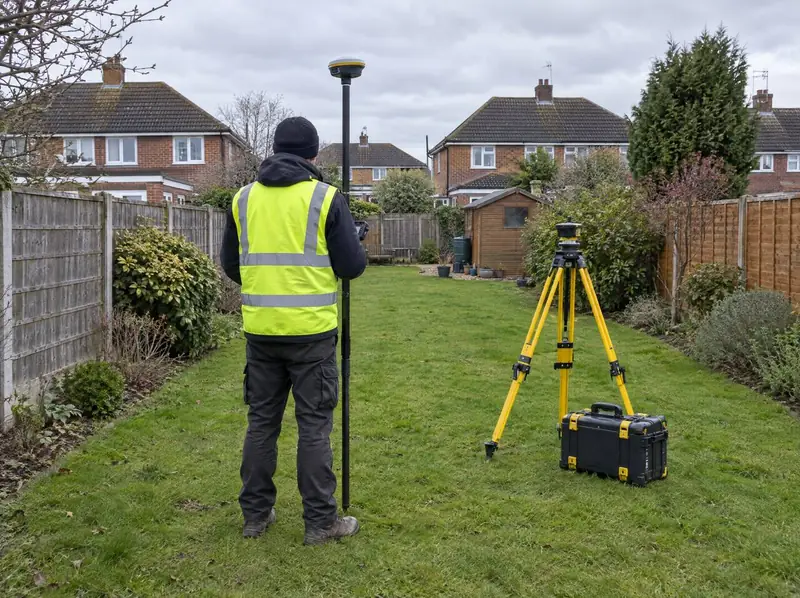
From first call to a clear answer, feasibility work in Diss follows a simple order: free appraisal, written quote, measured survey, title and constraints check, access and capacity study, concept designs, and pre-application advice from South Norfolk Council where it helps. You get a short report setting out the options, and the choice of what happens next stays with you.
Free plot appraisal
A desktop look at your plot, access, title plan and the planning picture, plus a conversation about what you want. If it looks viable we visit. There’s no cost and no obligation at this stage.
Scope and written quote
If you want to go further, we set out which surveys and checks your plot needs and what they will cost, in writing. Nothing is commissioned until you have agreed the scope and the price.
Survey and constraints check
A measured survey of the plot and its surroundings, then a check of the title, services, trees, flood risk and heritage designations, so the design starts from facts rather than guesses.
Concept designs and pre-application
Sketch layouts and simple elevations for the strongest options. Where it will help, we take one to the council for pre-application advice before anything is submitted.
Worth checking early
- A capacity figure is not a value; what a plot is worth depends on location, size, access and planning.
- Title problems such as covenants, ransom strips or missing rights of way can take time and money to resolve.
- A feasibility study can end in a no; finding that out early costs far less than a refused application.
Diss: questions to ask
What if my Diss garden plot fails the feasibility check?
Then you know before spending money on a planning application, and you know why. Sometimes a smaller scheme, an annexe, or working with the neighbours next door changes the answer, and we will say if so. If nothing does, you keep the survey and the report for the future. You are under no obligation to us either way.
Is my Diss garden in a flood zone or conservation area?
Both are public information. Flood zones are shown on the flood maps for planning in England, and South Norfolk Council publishes its conservation area boundaries and the listed buildings in its area. We check these as part of the free appraisal, along with Tree Preservation Orders, because each one changes what a scheme needs to show.
How do I know if my garden in Diss is big enough for a house?
Size alone won’t tell you. What matters is whether there is a workable access, enough distance from neighbours’ windows, room for gardens, parking and bins for both homes, and nothing on the title or in policy that rules it out. A feasibility study checks each of those for your plot. The first stage, a free plot appraisal, gives you an early view.
How much does a feasibility study cost in Diss?
It depends on the plot. A simple garden with a clear drive needs less work than one with protected trees, a flood zone or a complicated title. The first appraisal is free. After that we set out the scope and the price in writing, and you choose whether to go ahead before anything is commissioned.
Other options in Diss
- Planning promotion for your garden plot
- Corner and side plots
- Garden plot option agreement
- Joint venture on your garden plot
- Sell subject to planning
- Bungalows on large plots