
On this page
- How does selling part of your garden work?
- Should you sell with planning permission or without it?
- What does the solicitor do on a transfer of part?
- What will the council weigh up on a backland plot?
- Who pays for what when you sell a garden plot?
- How long does a garden plot sale usually take?
- What can go wrong, and how is it dealt with?
- How does selling the plot affect your house and your tax?
- Step by step
- Questions
Who this suits
- Owners of long back gardens who would rather have the money than the mowing
- Homeowners with a wide side garden or corner plot that could take a new home
- Anyone who already holds planning permission for a plot and wants a direct buyer
- Owners who want to stay in their house but release money tied up in spare land
- Families and executors handling a house whose garden is far bigger than anyone needs
How does selling part of your garden work?
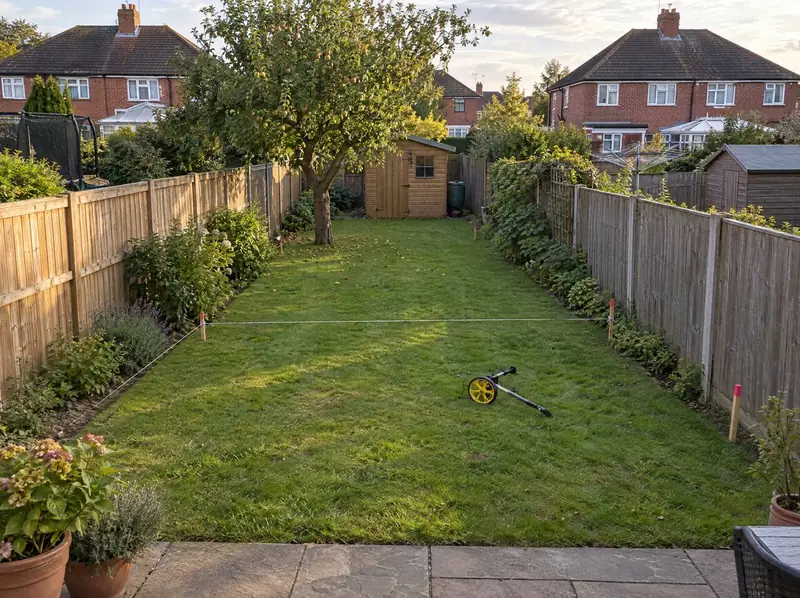
Selling part of your garden means agreeing a price for a defined piece of your land and then transferring that piece, and only that piece, to the buyer. You keep your house and the rest of the garden. The land sold is usually the far end of a long back garden, a wide side garden, or a corner plot with room for a home of its own.
With us, the buyer is S&K Property Investments and Improvement Ltd, trading as Backland Development. We agree the new boundary with you on a plan, make a written offer subject to survey, title and contract, and both sides then instruct solicitors. Once the sale completes, the plot is ours to plan, build on and maintain, and you are simply the neighbour.
Nothing needs to be built, cleared or fenced before you sell. Your part is mostly decisions: where the line goes, how the new home will be reached, and which protections you want written into the transfer.
Should you sell with planning permission or without it?
You can sell either way, and the difference is who carries the planning risk. If your plot already has permission for a new home, the buyer knows what can be built and the price reflects that. If it has none, we buy the land as it stands and take on the risk that the council says no, which the price has to allow for.
Selling without planning is the quickest route to money in the bank, because nobody waits for a council decision before completion. The trade-off is that you give up any increase in value a permission might bring.
If you would rather share in that increase and can wait, two other routes exist. A sale subject to planning fixes the price now but only completes if permission is granted. An option agreement gives us a set period to seek planning and then the right to buy. Each has its own page, and after the appraisal we will tell you honestly which suits your plot.
What does the solicitor do on a transfer of part?
A transfer of part is the legal process for selling a piece of a registered title rather than the whole of it. At HM Land Registry it is made on form TP1, with a plan showing the new boundary precisely. When the sale is registered, the plot gets its own title number and your house title shrinks to match.
Most of the solicitor’s work sits in the detail around that plan:
- Rights granted to the plot, such as a right of way over a shared drive and the right to connect to drains, water and power.
- Rights you keep, for example access to maintain your own walls, or the use of pipes that already run under the plot.
- Covenants that protect you, such as who builds and maintains the new boundary fence, or limits on what can be built near your house.
- Checks on your existing title for restrictive covenants, easements or old boundary questions that could limit building.
- Your lender’s release, if the house is mortgaged: the lender must agree to release the plot from its charge, usually on form DS3.
- Searches with the council and the water company, which reveal planning history, road status and any public sewers nearby.
What will the council weigh up on a backland plot?
Whether or not permission exists when you sell, the plot’s value rests on what the council would allow. Planning decisions are the council’s alone, made against the council’s Local Plan and the National Planning Policy Framework (NPPF), and backland schemes are tested on a familiar set of points.
Access comes first: the width of the drive, how far drivers can see where it meets the road, and the effect of cars passing close to your house and your neighbours’. Then come the character and layout of the street, overlooking and privacy, overshadowing and daylight, and whether both the existing home and the new one keep a reasonable garden.
Many councils use separation guides of around 21 metres between facing back windows and around 12 to 15 metres between a back window and a blank side wall, though your council’s own guide decides. Trees, wildlife and biodiversity net gain rules also come into it, along with parking, drainage and flood risk.
The new home will need fire engine access (or other measures, often sprinklers, agreed with building control and the fire service where a fire engine can’t get close enough). Bins matter too: guidance under the Building Regulations says residents shouldn’t carry rubbish more than 30 metres to the store, and the collection lorry should get within about 25 metres of it. On a deep, narrow plot, that detail alone can shape the layout.
In Wales Whether or not permission exists when you sell, the plot’s value rests on what the council would allow. Planning decisions are the council’s alone, made against the council’s Local Development Plan (LDP) and Planning Policy Wales (PPW), and backland schemes are tested on a familiar set of points. Many councils use separation guides of around 21 metres between facing back windows and around 12 to 15 metres between a back window and a blank side wall, though your council’s own guide decides. Trees, wildlife and the Welsh requirement to deliver a net benefit for biodiversity also come into it, along with parking, drainage and flood risk. The new home will need sprinklers, which every new home in Wales must have. Bins matter too: guidance under the Building Regulations as they apply in Wales says residents shouldn’t carry rubbish more than 30 metres to the store, and the collection lorry should get within about 25 metres of it. On a deep, narrow plot, that detail alone can shape the layout.
Who pays for what when you sell a garden plot?
Costs are set out in heads of terms before either side spends money on solicitors. The table shows where each one usually falls on a plot sale to us.
No estate agent is involved when you sell directly, so there is no agency commission to allow for unless you choose to appoint one yourself.
| Cost | Who pays |
|---|---|
| Garden plot appraisal | Free, with no obligation |
| Surveys the buyer needs: trees, ground, drainage, ecology | The buyer, as part of its own checks |
| Stamp Duty Land Tax (SDLT) on the plot | The buyer, because the tax falls on whoever acquires the land |
| Your solicitor’s fees | Agreed in heads of terms before you instruct anyone |
| Any fee your lender charges to release the plot | Agreed in heads of terms |
| New boundary fence and access works | Set out in the contract and transfer |
| Capital Gains Tax, if any | Depends on your circumstances; take advice from a tax adviser |
How long does a garden plot sale usually take?
A sale of a plot with a clean title and an agreed boundary usually moves at a similar pace to an ordinary house sale, so think in months rather than weeks. Selling without planning doesn’t add a council stage, because we take the plot as it is.
What slows things down is rarely the paperwork itself. The usual causes are a lender that is slow to consent to the release, a restrictive covenant that needs insurance or the beneficiary’s agreement, a boundary on the ground that doesn’t match the title plan, or a question over who owns the land the access crosses.
We look for these early. The desk appraisal includes the title register and plan, so most surprises surface before you have paid anyone anything.
What can go wrong, and how is it dealt with?
Most problems on garden plot sales fall into a handful of types, and each has a usual way through.
- A restrictive covenant against building. Options include indemnity insurance, agreement with whoever benefits from it, or an application to the Upper Tribunal (Lands Chamber) to change or remove it.
- A ransom strip. If a strip between the plot and the road belongs to someone else, its owner can demand payment for access. We check for this before offering, and it can change the deal or end it.
- A protected tree. Trees under a Tree Preservation Order, or in a conservation area, need consent or notice before work. They usually shape the layout rather than stop it.
- A public sewer under the lawn. Building over or near one may need a build-over agreement with the water company, and it can move where the house sits.
- Work close to a neighbour’s wall. The Party Wall etc. Act 1996 can apply, which means formal notices and sometimes surveyors.
- Your own house move. If you plan to sell the house soon, say so at the start. The order of the two sales affects both the legal work and the tax position.
How does selling the plot affect your house and your tax?
Your house will have a smaller garden and a new neighbour behind or beside it. How that affects its value depends on the house, the street and how well the new home is designed, so ask a local estate agent for a view if it matters to your plans.
On tax, the general position is that Private Residence Relief can cover part of a garden sold while you still own and live in the house, within a permitted area that is generally up to half a hectare including the house. Selling the garden after the house, or developing and selling the plot yourself, can change that. Take advice from a tax adviser before agreeing a deal, because it is the one cost that turns entirely on your circumstances.
One practical point: after completion your mortgage is secured on a smaller property. Your lender may ask for some of the sale money to go towards the loan, so check before you plan how to use it.
Step by step
Free plot appraisal
Tell us about your garden. We check the title plan, access, local policy and planning history from our desk, then talk it through with you. If it looks viable, we arrange a site visit, with no cost and no obligation.
Written offer and heads of terms
We put our offer in writing, subject to survey, title and contract. Heads of terms then record the plot boundary, the price, access rights, who pays which costs and the rough timetable for each stage.
Solicitors and lender
Your solicitor prepares the transfer of part and asks your mortgage lender to release the plot. Ours checks the title, covenants, rights of way and searches, while surveys of trees, ground and drainage run alongside.
Exchange and completion
Once both sides are satisfied, contracts are exchanged and a completion date is fixed. On completion the money passes through the solicitors and HM Land Registry registers the plot under a new title of its own.
After the sale
Any boundary fence or access works agreed in the transfer are carried out as set out. If the plot still needs planning, we apply as the new owner, and you can see and comment on the plans like any other neighbour.
Things to weigh up
- A sale without planning is priced for the planning risk we take on, so it usually pays less than the same plot with permission.
- A new home will be built close to yours, with building work and deliveries for a period.
- Your house keeps a smaller garden, which some future buyers will welcome and others won’t.
- Lender consent, old covenants or access disputes can slow a sale, and occasionally stop it.
- Selling the plot after you have sold or moved out of the house can change the tax position; take advice from a tax adviser.
Questions about sell your garden plot
Do I need planning permission before I sell part of my garden?
No. We buy suitable plots with or without planning, subject to survey, title and contract. Without permission, we take on the risk that the council refuses, and the price allows for that. With permission already granted, the buyer knows what can be built. If you want a price that reflects planning and can wait for a decision, a sale subject to planning or an option agreement may suit you better.
Can I sell part of my garden if my house is mortgaged?
Yes, as long as your lender agrees to release the plot from its charge. Your solicitor asks for that consent early, and the lender signs a release at completion. Some lenders want part of the sale money paid off the loan, and some charge an administration fee, so speak to yours before you agree a price.
How do you work out an offer for a garden plot?
We look at what could realistically be built, how it would be reached, what the council’s policies say and what new homes nearby sell for, then allow for the costs and risks of getting there. Location, size, access and planning all move the figure, which is why we don’t quote numbers before an appraisal. Any offer comes in writing with the reasoning explained.
Can I control what gets built behind my house after I sell?
Partly. The transfer can include covenants, for example controlling the number of homes or the position of windows facing your house, but these are negotiated rather than automatic. Once we own the plot, any planning application is ours and you can comment on it like any neighbour. If you want the scheme settled before the sale goes through, a sale subject to planning is the better fit.
Do I have to sell my driveway along with the plot?
Not necessarily. Where the plot is reached along a strip beside your house, that strip can be sold with the plot, or you can keep it and grant a right of way over it. Keeping it means you still own the land but share its use; selling it gives a cleaner boundary. Its width matters either way, because both the council and building control will look at it.
What happens if a neighbour objects?
If your plot is sold without planning, objections come into play only when we apply, and the council weighs them against planning policy rather than simply counting them. Privacy, overshadowing and traffic are planning matters; private concerns such as a lost view or an effect on house prices generally are not. If the plot already has permission, the objection stage has passed.
Who exactly would be buying my land?
S&K Property Investments and Improvement Ltd, company number 16932889, which trades as Backland Development. We’re a new brand within the S&K Group, based in Great Barr, Birmingham, so we won’t pretend to a long track record. What we can offer is a clear written offer, honest reasons behind it, and a straight answer if your plot doesn’t work.
Is there any cost to finding out whether my garden could be sold?
No. The garden plot appraisal is free and carries no obligation. We start with a desk check of the title, access, local policy and planning history, then talk it through with you. If the plot looks viable we arrange a site visit; if it doesn’t, we explain why, so you aren’t left guessing.