
On this page
- What can you do with a bungalow on a large plot?
- Why are bungalow plots often so wide?
- Should you keep the bungalow or replace it?
- How does the street scene affect what a council will allow?
- How do you avoid overlooking one-storey neighbours?
- Can you stay in your bungalow and release money from the plot?
- What checks come first on a bungalow plot?
- Which route suits a bungalow on a large plot?
- Step by step
- Questions
Who this suits
- Bungalow owners with a long back garden or a wide side garden they rarely use
- Downsizers who want to stay on one level but release money from spare land
- Families weighing a new home on the plot for a parent or grown-up child
- Owners of tired bungalows on generous plots who are open to replacing them
- Executors and beneficiaries handling a bungalow on a large plot
- Neighbours on a street of bungalows with long gardens who might combine land
What can you do with a bungalow on a large plot?
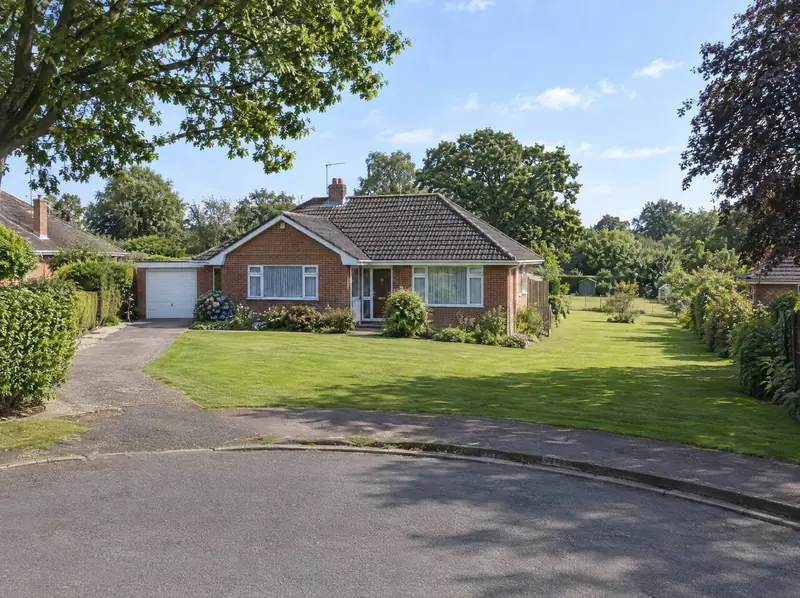
You have three broad choices: keep the bungalow and build a new home behind it, keep it and build beside it, or replace it with two or more new homes. Each suits a different shape of plot and a different plan for your own future.
Building behind is backland development: a new home on land behind the bungalow, reached by a drive alongside it. Building beside, where the plot is wide, is usually infill: the new home has its own frontage on the street, which councils often find easier to accept. Replacement means taking the bungalow down and designing the whole plot afresh, often as a pair of homes or a short terrace.
None of these is permitted development. A new separate home always needs planning permission, usually through a full or outline application, and the decision is the council’s.
Why are bungalow plots often so wide?
A bungalow spreads all its rooms across one floor, so it needs a bigger footprint than a two-storey house with the same space. Plots for bungalows were often laid out wider to match, and many have a drive or garage alongside as well.
That width is useful. A plot wide enough for a bungalow plus a side drive may also be wide enough to give a home behind a decent access, or to fit a second home alongside with its own frontage. A long, wide plot can sometimes manage both.
Width isn’t enough on its own, though. The gaps between buildings are often part of what gives a bungalow road its character, and councils may resist filling them. That’s why we look at the street as a whole, not just your boundary lines.
Should you keep the bungalow or replace it?
Keeping the bungalow suits owners who want to stay put or keep the house for the family. Replacing it suits a plot where the bungalow is near the end of its useful life, or where a fresh layout could fit noticeably more homes than adding one behind or beside. The table sets out the main differences.
| Option | Usually suits | Main questions for the council |
|---|---|---|
| Keep it, build behind | Deep plots with room for a drive alongside the bungalow | Effect of the drive on your bungalow and next door, privacy, garden space for both homes |
| Keep it, build beside | Wide plots where a second home can face the street | Spacing between buildings, the building line, roof heights and the look of the street |
| Replace with more homes | Large plots where the bungalow is dated or poorly placed | Character of the street, the number of homes, height and bulk next to bungalows, parking |
How does the street scene affect what a council will allow?
The street scene is how a road looks as a whole: the rhythm of roofs, the gaps between buildings, how far homes sit back, and the materials used. On a road of bungalows, councils pay close attention to anything that breaks that pattern, especially a two-storey building where everything else is single-storey.
In England, national policy now gives substantial weight to well-designed extra homes within existing plots, within limits on footprint and garden space, but councils still refuse schemes that harm the street’s character or neighbours, and gardens in built-up areas don’t count as brownfield land. In Wales, Planning Policy Wales and Technical Advice Note 12 put weight on design quality, character and amenity. Either way, the council’s own plan and design guide set the detail.
In practice, schemes on bungalow plots often keep to similar ridge heights, follow the existing building line and leave visible gaps between buildings. A chalet bungalow, with rooms in the roof lit mainly by rooflights or carefully placed dormers, can add space while still reading as a low building from the road.
How do you avoid overlooking one-storey neighbours?
Bungalow neighbours are more exposed to overlooking than most, because their bedrooms and living rooms are all at ground level and their gardens are easy to see into from above. A new home with upstairs windows facing their garden is often the single biggest objection.
Shadow matters as well. A taller building next to a low one can take light from windows and gardens, particularly to the north of it. Councils usually look at daylight and sunlight alongside privacy. Approaches that tend to help include:
- Single-storey or chalet designs where neighbours are single-storey
- Upstairs windows facing the street or the plot’s own garden rather than side boundaries
- Rooflights or high-level and obscure-glazed windows where a side view can’t be avoided
- Keeping enough distance: many councils use around 21 metres between facing back windows and around 12 to 15 metres from a back window to a blank side wall, though your council’s own guide decides
- Fencing and planting along boundaries, shown on the plans
Can you stay in your bungalow and release money from the plot?
Yes. If you want to stay on one level and close to people you know, selling part of the plot lets you do that while freeing up land you no longer use. The new home is built behind or beside, and you keep the bungalow with a smaller, easier garden.
Some owners prefer to sell the plot now and move later, or to have a new single-level home built for themselves and sell the bungalow afterwards. The order matters for tax. Private Residence Relief can cover part of a garden sold while you still own and live in the house, within a permitted area of generally up to half a hectare including the house, but selling the garden after the house, or developing and selling yourself, can change the position. HMRC also cautions that land fenced or divided off from the garden for development may not qualify, and the land should still be in use as garden when it’s sold. Take advice from a tax adviser before deciding.
If your bungalow is mortgaged, the lender must agree to release the plot from its charge before a sale completes. Your solicitor arranges that as part of the transfer of part.
What checks come first on a bungalow plot?
The title comes first. Some estates were sold with restrictive covenants, for example limiting each plot to one dwelling or controlling building heights. A covenant doesn’t always end a scheme: options include indemnity insurance, agreement with whoever benefits from it, or an application to the Upper Tribunal (Lands Chamber).
After that, the practical checks are much the same as for any garden plot:
- Access width and visibility, and in England whether a fire engine can get close enough or other measures, often sprinklers, are needed; in Wales sprinklers are required in every new house
- Bins: in England, residents shouldn’t carry waste more than 30 metres, and the collection vehicle should get within about 25 metres of the store
- Trees protected by a Tree Preservation Order or in a conservation area
- Public sewers near the bungalow or under the garden, which may need a build-over agreement
- The Party Wall etc. Act 1996, where work comes close to a neighbour’s building or boundary
- Community Infrastructure Levy where the council charges it, and biodiversity rules for the plot
Which route suits a bungalow on a large plot?
That depends on whether you want to stay, how much involvement you want, and whether the plot works better as one extra home or as a replacement scheme. These are the routes we offer:
- Sell part of the plot: keep the bungalow and sell the land behind or beside it, with or without planning, subject to survey, title and contract
- Sell subject to planning: we normally fund the application, and if planning is refused you keep your land
- Option agreement: we take time to seek planning, with your reasonable legal fees covered up to a cap set in heads of terms
- Joint venture: you put in the land and, in the usual structure, we fund and manage design, planning and building, with you sharing in the outcome on agreed terms
- Design and build: you keep the land and we design, get planning for and build a new home on it, perhaps for you or a relative
- Combine with neighbours: where several bungalows on a road have long gardens, one shared scheme may work better
Step by step
Free plot appraisal
We look at the plot’s width and depth, the access, the planning history nearby and the character of the street, then talk through what you want. It’s free, with no obligation, and a site visit follows if it looks viable.
Compare the options
We sketch what could realistically fit: a home behind, a home beside, or a replacement scheme. You see the trade-offs for each, including what happens to your own garden and parking, before choosing a route.
Choose your route
You can sell a plot and stay put, sell subject to planning, grant an option, enter a joint venture, or keep the land and have us design, get planning for and build a new home on it.
Planning application
We prepare drawings and reports designed around single-storey neighbours and the street scene, usually seek pre-application advice, and submit. The council consults neighbours and makes the decision.
Sale or build
If you sell, your solicitor handles the transfer and any lender release. If we build, you receive a written quote after design and survey, and the new home is built and handed over to you.
Things to weigh up
- A two-storey home on a road of bungalows is often resisted, so designs may need to stay low.
- Filling the gap beside a bungalow can change the look of the street, which councils weigh carefully.
- You’ll keep a smaller garden, and a drive alongside your bungalow brings cars past your windows.
- Replacing the bungalow means moving out during demolition and building, which suits some owners and not others.
- Covenants on older estates can limit building, and resolving one takes time and may cost money.
- The order in which you sell the plot and the bungalow can affect your tax, so take advice first.
Questions about bungalows on large plots
Can I build a house in the garden of my bungalow?
Often, if the plot is deep or wide enough and there’s a workable way in. A new home always needs planning permission, and the council will look at access, privacy, daylight, garden space for both homes and the character of the street. On bungalow roads, a single-storey or chalet design is usually the starting point, because a two-storey home can overlook neighbours and stand out.
Is it better to build behind or beside my bungalow?
Beside is often easier where the plot is wide, because the new home faces the street like its neighbours and doesn’t need a long shared drive. Behind suits deeper, narrower plots but brings questions about cars passing your bungalow and privacy at the back. Which works depends on your plot’s shape, the street and your council’s guidance, so we sketch both at the appraisal.
Can I knock down my bungalow and build two houses?
It may be possible on a large enough plot. You would need planning permission for the new homes, and the council will weigh the character of the street, the height and bulk next to bungalow neighbours, parking and garden space. Two semi-detached homes or a pair of chalet bungalows are common answers, but the council decides what fits.
Will my neighbours be overlooked by a new house next to my bungalow?
That depends on the design. Upstairs windows facing a bungalow garden are the most common objection. Designs that keep to one storey, use rooflights or high-level windows on the sides, and keep a good distance from neighbours’ back windows go a long way to avoiding it. Many councils use separation guides of around 21 metres between facing back windows; your council’s own guide decides.
Can I stay in my bungalow while the new home is built?
If you keep the bungalow and build behind or beside it, yes. Building work brings some noise and disruption, and access may be shared for a while, but you stay at home. If the bungalow is being replaced, you would need to live elsewhere during demolition and building, which is one good reason to keep it.
Does selling part of my bungalow’s garden affect my tax?
It can. Private Residence Relief can cover part of a garden sold while you still own and live in the house, generally within a permitted area of up to half a hectare including the house. Selling the garden after the bungalow, or developing and selling yourself, can change the position, and land divided off for development may not qualify. Capital Gains Tax depends on the details, so take advice from a tax adviser first.
Could I have a new bungalow built for myself on the plot?
Yes. Through our design and build route you keep the land, and we design, get planning for and build a new home on it, which could be a single-level home for you. Some owners then sell or let the original bungalow. The order of moves can matter for tax, so take advice before deciding. You get a written quote after design and survey.
Do covenants stop building on bungalow estates?
Sometimes they limit it. Some estates were sold with covenants restricting each plot to one dwelling or controlling heights. That isn’t always the end of it: indemnity insurance, agreement with whoever benefits from the covenant, or an application to the Upper Tribunal (Lands Chamber) can each be options. Your solicitor checks the title at the start.