
- Planning authority
- Lancaster City Council
- Postcodes
- LA1
- Noon sun, 21 March
- About 36°
- Shadow from a 5 m eaves line
- About 6.9 m
- Planning plan
- Local Plan
- County
- Lancashire
What shapes a plot in Lancaster
Pre-application advice from Lancaster City Council can be a sensible first step for a Lancaster garden plot, particularly where the access is tight or the area has a distinctive character. The council sets its own fees and response times.
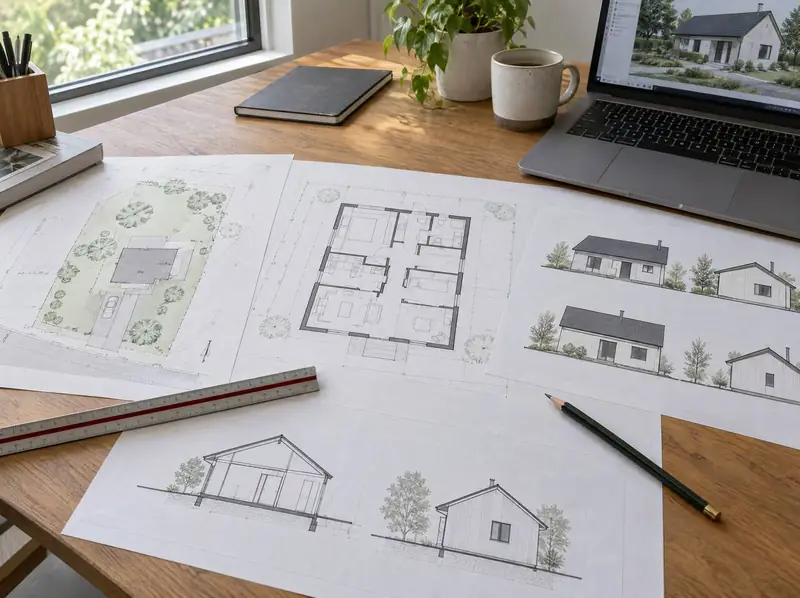
We prepare a focused pack: site plan, sketch layout, sections showing heights and separation, and specific questions about access, design and amenity under the council’s Local Plan. The written reply doesn’t bind the final decision, but it tells us which issues to resolve before the formal application is submitted.
The next steps, locally
If you already have outline permission or a full permission with conditions for a plot in Lancaster, we can take it from there. We check what still needs approval, prepare reserved matters or condition details, and submit them. Then you can move on to the build with us, sell the plot, or hold it while you decide.
Free plot appraisal
We review the title plan, access, constraints, policy and planning history around your address, then talk it through with you. If the plot looks viable we visit, and tell you plainly whether an application is worth making.
Surveys and design
A measured survey comes first, followed by the specialist surveys the plot needs, such as trees or ecology. The layout is designed around access, privacy, daylight, parking, bins and garden space for both homes.
Pre-application advice
Where policy is tight or the plot unusual, we put a draft scheme to the council’s planners first. Their written response shows which issues to fix before you pay the full application fee.
Decision and next steps
If permission is granted, we explain every condition and what must happen before work starts. If it’s refused, we review the reasons with you and set out the options: amend and resubmit, appeal, or stop.
Worth checking early
- Planning is the council’s decision; even a well-prepared application can be refused, and the costs of preparing it aren’t recovered.
- Neighbours have a formal say during consultation, and the council must weigh any planning objections they raise.
- Permission doesn’t override private rights: covenants, ransom strips, sewer easements and party wall matters still need dealing with separately.
Lancaster: questions to ask
How close to neighbours can a new home in Lancaster be?
It depends on the council’s guidance and the window layout. Many councils use around 21 metres between facing back windows and around 12 to 15 metres between a back window and a blank side wall, but the guide used by Lancaster City Council decides. Screening, levels, roof form and window positions can all change what is acceptable.
How long will my Lancaster garden plot application take?
The statutory period for a minor application, such as one or a few new homes, is 8 weeks from validation, in both England and Wales. Many take longer, and the council may ask you to agree an extension in writing. If no decision is made in time and no extension is agreed, you can appeal for non-determination.
Can I sell my Lancaster garden plot once it has planning permission?
Yes. Planning permission stays with the land, so the plot can be sold with it and the buyer can build the approved scheme, subject to any conditions. The plot will need its own title through a transfer of part at HM Land Registry, and any mortgage lender will need to release it. Take advice from a tax adviser before selling.
Is pre-application advice available in Lancaster?
Most planning authorities, including Lancaster City Council, offer pre-application advice, usually for a fee, with their own response times. It isn’t compulsory and doesn’t bind the final decision, but for a garden plot with a tight access, strict policy or an earlier refusal, it can show which issues to resolve before you apply formally.
Other options in Lancaster
- Sell subject to planning
- Build a home for family in your garden
- Sell part of your garden
- Build a new home in your garden
- Joint venture on your garden plot
- Garden plot option agreement