
- Planning authority
- Cotswold District Council
- Postcodes
- GL7
- Noon sun, 21 March
- About 38°
- Shadow from a 5 m eaves line
- About 6.3 m
- Planning plan
- Local Plan
- County
- Gloucestershire
Cirencester: light, access and policy
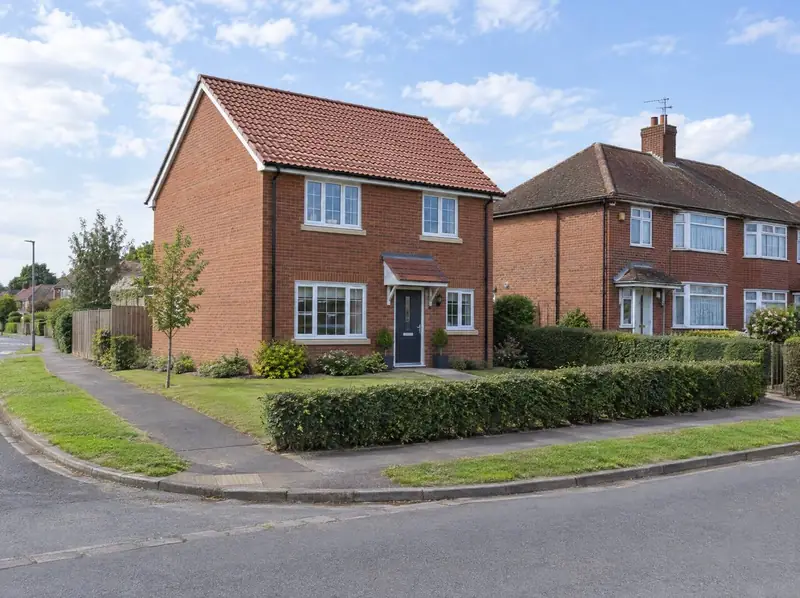
Light is a real test on side plots because the new home sits so close to existing ones. In midwinter the noon sun in Cirencester is only around 15° above the horizon, so even a modest roof can shade a neighbour’s side windows or garden for long periods.
Councils, including Cotswold District Council, look at daylight and sunlight to existing homes when deciding applications. A lower eaves line, a hipped roof or a slightly wider gap at the side can make the difference, and we test those options before the drawings are finalised.
The next steps, locally
Give us your Cirencester address and a sense of what you’re hoping for. Our desktop review covers the policies Cotswold District Council works to, recent applications on nearby side and corner plots, and anything in your title that might restrict building. A clear result leads to a visit when it suits you, after which we explain each route and what it would mean in practice.
Free plot appraisal
We look at your plot on maps, the title plan and street views, check planning history nearby and talk it through with you. If a home beside yours looks possible we visit. No cost, no obligation.
Read the street
We measure the plot and record the building line, the gaps between houses, roof heights, materials and boundary walls, then check where a new drive could go and what drivers would be able to see from it.
Choose your route
Sell the plot outright, sell it subject to planning, or grant an option while you keep your house. Or keep the land and have us design, get planning for and build a new home on it.
Design and planning
We draw a home that sits in the street rather than fighting it, usually take pre-application advice, and submit the application. The council consults neighbours and decides; small schemes often take a few months.
Worth checking early
- Losing a side garden or drive changes how your house works day to day, from parking to getting bins round the back.
- Attaching a home to yours brings party wall, fire and sound separation work, and changes the feel of your own house.
- Corners kept open by design can be harder to build on than they look; character can matter more than space.
Questions about garden plots in Cirencester
Can I attach a new home to my house in Cirencester?
Yes, where it suits the street, for example on the end of a semi-detached pair. It needs planning permission as a separate home, fire and sound separation under Building Regulations, and possibly a party wall agreement. We check whether attached or detached fits your road better.
Could I sell just my side garden in Cirencester and stay put?
Yes. Legally it’s a transfer of part: HM Land Registry gives the side plot a title of its own, while your house keeps the rest. A mortgage lender has to consent to releasing the plot from its charge. Where the plot suits, we buy with or without planning, subject to survey, title and contract.
Is there a fee for checking my side plot in Cirencester?
There’s no fee. The appraisal is free and you’re under no obligation. We work from maps, the title and a phone call first, and only visit if the plot seems worth it. Nothing binds you until you’ve picked a route and read the written terms.
Is my Cirencester side garden wide enough for a new house?
It depends on how wide homes are in your street, the gaps between them, whether the new home would be attached or detached and what the council’s design guidance says. There’s no single minimum width. We measure your plot and the street as part of a free appraisal.
Other options in Cirencester
- Combine gardens with your neighbours
- Large rear gardens
- Bungalows on large plots
- Plot feasibility and design
- Garden plot option agreement
- Planning permission for a garden plot