
- Planning authority
- Canterbury City Council
- Postcodes
- CT1, CT2
- Noon sun, 21 March
- About 39°
- Shadow from a 5 m eaves line
- About 6.2 m
- Planning plan
- Local Plan
- County
- Kent
The local picture in Canterbury
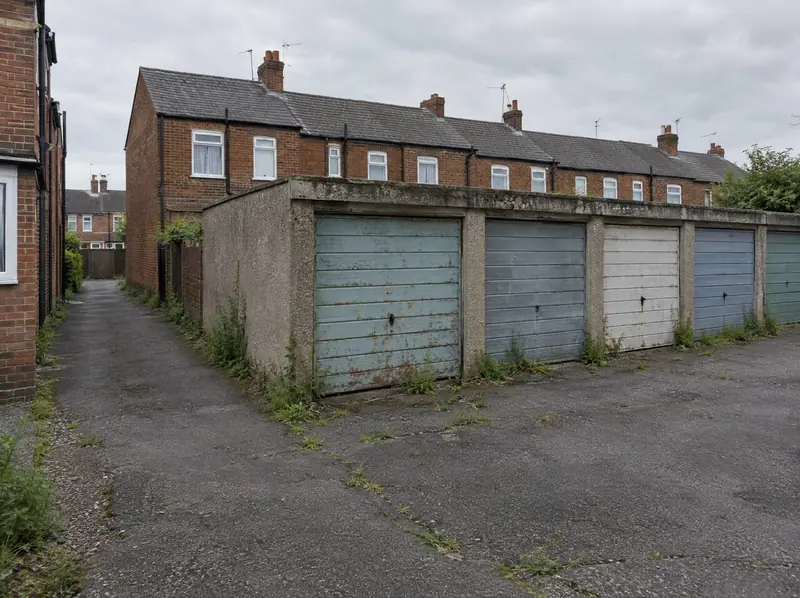
Canterbury City Council is the body that decides whether homes can replace the garages or yard, and the council’s Local Plan is the main yardstick it uses, alongside national policy and its own highways guidance. Parking standards, lane widths and distances to neighbouring windows are the usual sticking points on garage sites.
So we start there. Before any layout is drawn, we read the policies that apply to your site and, where useful, ask the council for an early view. Access and parking questions are then answered in the design, not left for the planning officer to raise.
How we’d take it forward in Canterbury
From here the pace is yours. A sale only proceeds once heads of terms are in writing and you’re happy with them; a build only proceeds once surveys, design and a written quote are in front of you. Garage tenancies are brought to an end under their own terms, on legal advice. Canterbury City Council then consults neighbours on the application and makes the decision.
Free site appraisal
We look at the site on maps, the title plan and the planning history, then talk through who uses it now. If it looks workable we visit. There’s no cost and no obligation.
Site checks and layout
We look at the access lane, the buildings, likely asbestos and contamination, drains and neighbours’ windows, then sketch what could realistically fit, from one home to a small group, or nothing at all.
Choose your route
Sell the site outright or subject to planning, grant an option, or keep it and have us design, get planning for and build. Garage tenancies and licences are ended properly before any work starts.
Planning, then sale or build
We prepare and submit the application and the council decides. If you sell, your solicitor handles the transfer. If you build, a written quote follows design and survey, then demolition and construction.
Worth checking early
- Asbestos, contamination and bat surveys add cost and time before demolition can start.
- Rights of way over the court or lane can limit what you can build, and some arise from long use rather than the title.
- If garage income stops before a sale or build completes, you lose that income in the meantime.
Canterbury: questions to ask
Can neighbours in Canterbury block a garage court scheme?
Neighbours are consulted and can object, and those with a legal right of way over the court have rights the scheme must respect. Objections alone don’t decide the outcome. We map every right first and design to keep routes open where they are needed.
Will you buy my garages in Canterbury with tenants in them?
Possibly. Any purchase is subject to survey, title and contract, with or without planning in place. Existing tenancies and licences must be brought to an end properly under their own terms, and when that happens forms part of the agreed deal. Get legal advice before any notice is served.
Who has the final say on a Canterbury garage court scheme?
Canterbury City Council, as the local planning authority. Officers weigh the scheme against the council’s Local Plan and national policy, plus highways and design guidance, after hearing from neighbours and the highway authority. We put the application together and answer the officer’s questions, yet the verdict is never ours to give.
What does it cost to have my Canterbury garage site assessed?
Nothing. Our assessment is free, with no obligation. We review the title, maps and planning history and speak to you before deciding whether a visit is worthwhile. You’re only committed after choosing a route and agreeing terms set out in writing.
Other options in Canterbury
- Combine gardens with your neighbours
- Sell subject to planning
- Garden plot option agreement
- Bungalows on large plots
- Joint venture on your garden plot
- Planning permission for a garden plot