
- Planning authority
- City of Lincoln Council
- Postcodes
- LN2
- Noon sun, 21 March
- About 37°
- Shadow from a 5 m eaves line
- About 6.7 m
- Planning plan
- Local Plan
- County
- Lincolnshire
Before you decide in Lincoln
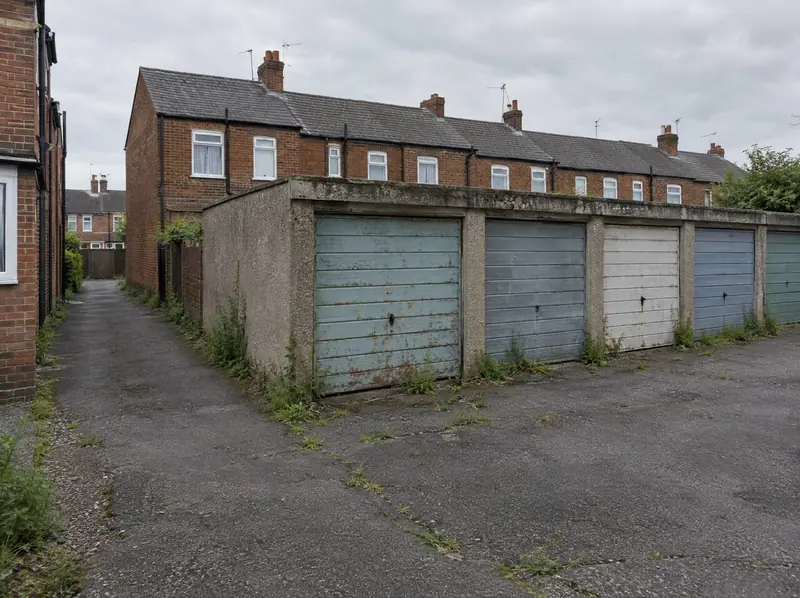
City of Lincoln Council is the body that decides whether homes can replace the garages or yard, and the council’s Local Plan is the main yardstick it uses, alongside national policy and its own highways guidance. Parking standards, lane widths and distances to neighbouring windows are the usual sticking points on garage sites.
So we start there. Before any layout is drawn, we read the policies that apply to your site and, where useful, ask the council for an early view. Access and parking questions are then answered in the design, not left for the planning officer to raise.
From first call to decision
A garage enquiry from Lincoln can open with a phone call and a handful of photos showing the court, the lane and the roofs. We then run a desktop check and visit if the site deserves it. Sellers move on to heads of terms, handled by their solicitor; owners who want to build move on to surveys, design and a written quote.
Free site appraisal
We look at the site on maps, the title plan and the planning history, then talk through who uses it now. If it looks workable we visit. There’s no cost and no obligation.
Rights and title review
We map who has rights over the court and lane, which garages are let and on what terms, and whether any covenants, charges or strips of land you don’t own could block a scheme.
Site checks and layout
We look at the access lane, the buildings, likely asbestos and contamination, drains and neighbours’ windows, then sketch what could realistically fit, from one home to a small group, or nothing at all.
Choose your route
Sell the site outright or subject to planning, grant an option, or keep it and have us design, get planning for and build. Garage tenancies and licences are ended properly before any work starts.
Worth checking early
- If garage income stops before a sale or build completes, you lose that income in the meantime.
- Ending garage tenancies or licences takes time, and some tenants may have legal protection; get legal advice before serving notice.
- Asbestos, contamination and bat surveys add cost and time before demolition can start.
Your questions, answered for Lincoln
Is the lane to my Lincoln garages wide enough?
It depends on the lane, the number of homes and local highway standards. The council will look at width, visibility at the street and the effect on neighbours. Fire and bin access matter too. A narrow lane may limit the number of homes rather than ruling the site out.
Can I build houses on my garage block in Lincoln?
Possibly, if the lane works for cars, bins and emergency access, neighbours’ privacy and light are protected, and rights over the site can be dealt with. Homes there need planning permission, which is City of Lincoln Council’s decision. A free appraisal shows whether the site merits going further.
Can you build homes on my yard in Lincoln if I keep it?
Yes. You keep ownership while we handle the lot: surveys, demolition of the old buildings, design, the planning application, construction and the structural warranty that buyers’ lenders tend to need. A written quote is given once design and survey are complete; guide prices before then are only guides.
Do I need an asbestos survey for garages in Lincoln?
Yes, before demolition. Health and Safety Executive guidance says a refurbishment and demolition survey must find asbestos before structural work begins. Older garage roofs are often asbestos cement sheeting. Specialists carry out the survey and removal, and we build both into the plan.
Other options in Lincoln
- Large rear gardens
- Build a home for family in your garden
- Combine gardens with your neighbours
- Corner and side plots
- Plot feasibility and design
- Garden plot option agreement