
- Nation
- England
- National planning policy
- NPPF
- Planning authorities
- 6
- County town
- Reading
Berkshire: the planning picture
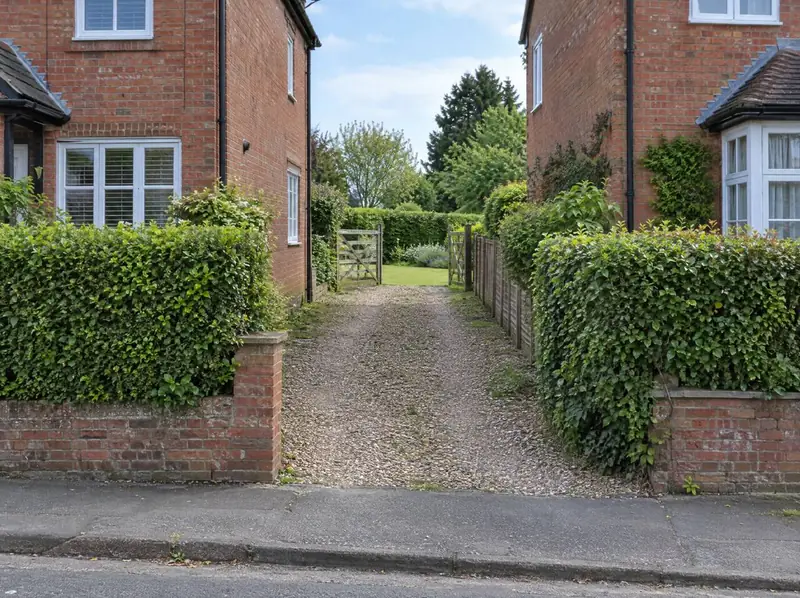
Access width is where many plots in Berkshire are won or lost. In England, building control looks for fire engine access (or other measures, often sprinklers, agreed with building control and the fire service where a fire engine can’t get close enough), and bins need a store residents can reach easily and a lorry can get near. Highways officers then look at visibility where the drive meets the road. A side passage that suits a wheelie bin may fall well short of what a new home needs, so we measure it early, before a layout is drawn, and tell you if the gap simply isn’t enough.
Planning authorities covering Berkshire include Bracknell Forest Council, Reading Borough Council, Royal Borough of Windsor and Maidenhead, Slough Borough Council, West Berkshire Council, Wokingham Borough Council.
How it works
Free plot appraisal
We start with the access, not the plot: title plans, rights of way, the width on the ground and the route to the road. It’s a desktop check and a conversation, with a site visit if it looks viable, at no cost.
Title and access check
With your solicitor we confirm who owns every strip between the plot and the road, what rights already exist and whether they cover a new home. Any ransom strip or missing right shows up at this stage.
Secure the way in
If a right of way needs widening, a strip needs buying or a neighbour needs to come in, we agree the approach with you and negotiate it, so the terms are settled before planning money is spent.
Planning application
We design a layout that answers the access, privacy and neighbour questions councils ask about tandem and backland plots, then apply. The council consults neighbours and decides, and the decision is always the council’s.
Sale or build
Depending on the route you chose, the sale completes through a transfer of part, or you keep the land and we give a written quote for building the new home after design and survey.
Tandem and landlocked plots in towns across Berkshire
- Reading
- Slough
- Bracknell
- Maidenhead
- Wokingham
- Newbury
- Earley
- Windsor
- Woodley
- Crowthorne
- Thatcham
- Sandhurst
- Ascot
Questions about tandem and landlocked plots in Berkshire
What does a free appraisal cover for a plot with difficult access in Berkshire?
It looks at the title plan, existing rights of way, who owns each part of the route, the width on the ground and the planning picture. We begin from maps, the title and the planning record, talk it over with you, and only then visit if the land seems workable. You pay nothing and owe nothing.
Can landlocked land in Berkshire ever be built on?
Yes, if a legal access can be secured. That might mean buying a strip, agreeing a right of way, using a back lane, or combining with a neighbour. Planning permission alone doesn’t give a right to cross someone else’s land.
Do councils in Berkshire allow tandem development?
Each council decides case by case, using its own plan and design guidance. Tandem layouts are generally treated with care because of noise, headlights and privacy for the house in front. A well-designed scheme with a good gap from windows and a low-profile home has a better chance.
Can neighbours in Berkshire combine their gardens?
Yes. Putting two or more adjoining back gardens together can allow one shared access and a better layout than separate plots. Each owner keeps their house. The owners usually sign a collaboration agreement, with an equalisation clause so that value is shared fairly even though only one garden provides the access. Each household should take its own legal advice.