
- Planning authority
- Wiltshire Council
- Postcodes
- SP1
- Noon sun, 21 March
- About 39°
- Shadow from a 5 m eaves line
- About 6.2 m
- Planning plan
- Local Plan
- County
- Wiltshire
The local picture in Salisbury
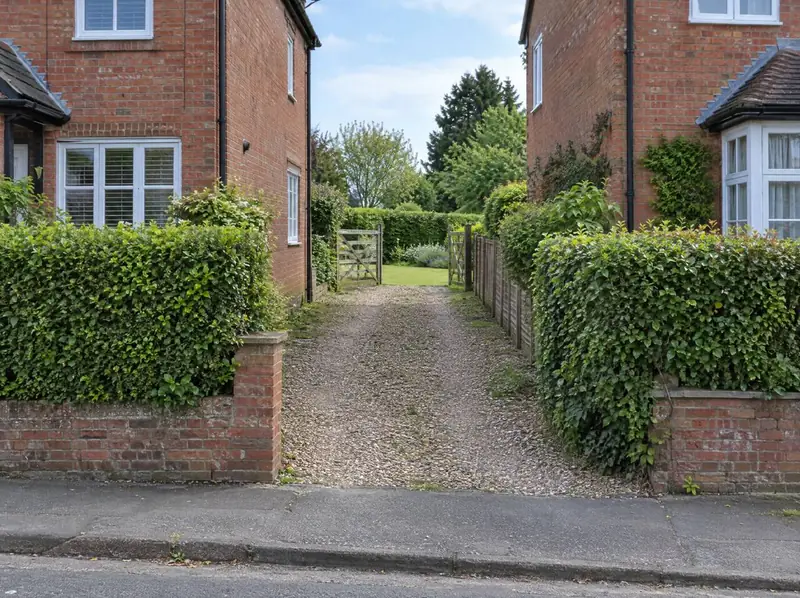
Back lanes behind homes in SP1 can be public roads, private tracks or a mix of both. If the lane is maintained at public expense, it will be on the list of streets the highway authority keeps, which anyone can check. If it’s private, you need a right to use it with vehicles for a new home.
We check that before planning anything, then look at how Wiltshire Council is likely to judge a home reached from the back rather than past the front.
How we’d take it forward in Salisbury
Call us or use the form and tell us roughly where the land is and how you reach it now. We check the title and the planning history around Salisbury, then come back to you. If the access can’t be secured on sensible terms, we’ll say so plainly and early, and there is nothing to pay for the appraisal.
Free plot appraisal
We start with the access, not the plot: title plans, rights of way, the width on the ground and the route to the road. It’s a desktop check and a conversation, with a site visit if it looks viable, at no cost.
Title and access check
With your solicitor we confirm who owns every strip between the plot and the road, what rights already exist and whether they cover a new home. Any ransom strip or missing right shows up at this stage.
Secure the way in
If a right of way needs widening, a strip needs buying or a neighbour needs to come in, we agree the approach with you and negotiate it, so the terms are settled before planning money is spent.
Planning application
We design a layout that answers the access, privacy and neighbour questions councils ask about tandem and backland plots, then apply. The council consults neighbours and decides, and the decision is always the council’s.
Worth checking early
- Tandem layouts affect the front house’s privacy and quiet, and councils weigh that carefully.
- Planning permission gives no right to cross land you don’t own; the legal access has to be secured separately.
- A right of way that has served a garage or field for years may not legally cover a new house.
Your questions, answered for Salisbury
How do I find out if a lane behind my Salisbury home is a public road?
The highway authority keeps a list of streets maintained at public expense, and anyone can inspect it free of charge. If the lane isn’t on it, it’s probably private, and you’ll need to know who owns it and whether your title gives a vehicle right of way that would cover a new home.
Could my neighbour and I in Salisbury share one new access?
Often, yes. If both your gardens are long, combining them can give one shared drive and a better layout than either garden alone. Each owner keeps their house, and a written agreement sets out how the value is shared fairly.
What if a neighbour in Salisbury owns the strip I need to cross?
Then you need their agreement, either to buy the strip or to grant a right of way over it. Terms are negotiated, often as a one-off payment or a share of the value the access creates. Both sides should take legal advice. We can make the approach with you.
Can I build behind my house in Salisbury if the only way in is my drive?
Possibly. That would be a tandem layout, with the new home behind yours sharing your drive. Wiltshire Council will look at the effect of cars passing your house, privacy, garden space and whether it suits the area. Fire and bin access also need checking. The decision is the council’s, and a good design improves the odds.
Other options in Salisbury
- Build a new home in your garden
- Sell part of your garden
- Bungalows on large plots
- Planning promotion for your garden plot
- Build a home for family in your garden
- Large rear gardens