
- Nation
- England
- National planning policy
- NPPF
- Planning authorities
- 13
- City
- Canterbury
What to know in Kent
Under the National Planning Policy Framework (NPPF), councils weigh the character of an area, neighbours’ living conditions and the quality of design when judging homes in gardens. Each council in Kent then adds its own detail in the council’s Local Plan and the council’s design guide or supplementary planning document. A capacity study turns those policies into measurements on your plot: separation distances, garden sizes, parking and building heights. Many councils work to roughly 21 metres where rear windows face each other, but the council’s own guide decides, so we check the right one.
Planning authorities covering Kent include Ashford Borough Council, Canterbury City Council, Dartford Borough Council, Dover District Council, Folkestone and Hythe District Council, Gravesham Borough Council, Maidstone Borough Council, Medway Council, Sevenoaks District Council, Swale Borough Council, Thanet District Council, Tonbridge and Malling Borough Council, Tunbridge Wells Borough Council.
How it works
Free plot appraisal
A desktop look at your plot, access, title plan and the planning picture, plus a conversation about what you want. If it looks viable we visit. There’s no cost and no obligation at this stage.
Scope and written quote
If you want to go further, we set out which surveys and checks your plot needs and what they will cost, in writing. Nothing is commissioned until you have agreed the scope and the price.
Survey and constraints check
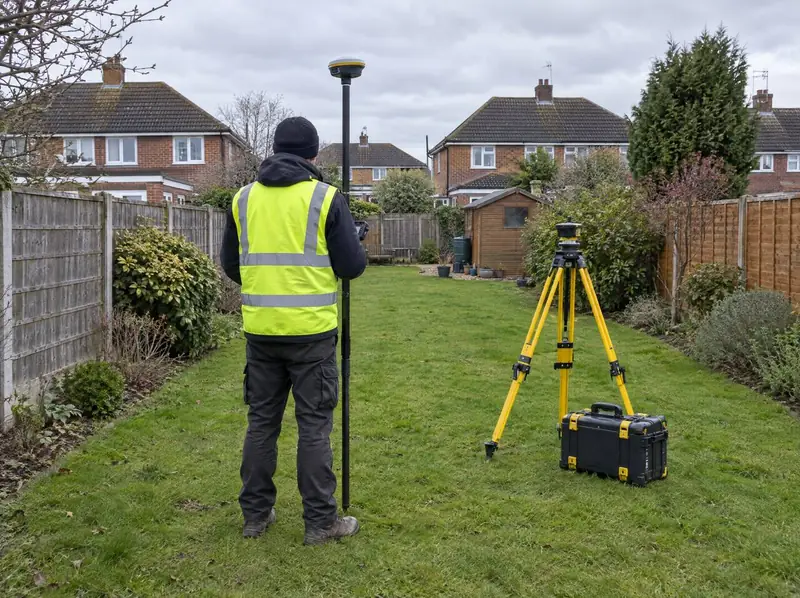
A measured survey of the plot and its surroundings, then a check of the title, services, trees, flood risk and heritage designations, so the design starts from facts rather than guesses.
Access and capacity study
We test each workable route in and the number, size and position of homes the plot could hold, against separation distances, garden space, parking, bins and daylight for neighbours.
Concept designs and pre-application
Sketch layouts and simple elevations for the strongest options. Where it will help, we take one to the council for pre-application advice before anything is submitted.
Feasibility report and options
A clear yes, no or maybe, the reasons behind it, and the routes open to you: apply for planning, build, sell or partner. You decide what happens next, with no obligation to use us for it.
Feasibility and design in towns across Kent
- Maidstone
- Gillingham
- Chatham
- Tunbridge Wells
- Folkestone
- Margate
- Ashford, Kent
- Canterbury
- Sittingbourne
- Gravesend
- Dartford
- Ramsgate
- Dover
- Tonbridge
- Strood
- Whitstable
- Deal
- Sevenoaks
- Rochester
- Herne Bay
- Broadstairs
- Faversham
- Swanley
- Longfield
- Swanscombe
Questions about feasibility and design in Kent
How long does feasibility take for a plot in Kent?
Often a few weeks, sometimes a couple of months. It depends on surveyor availability, whether title documents or specialist surveys are needed, and how long the council takes to respond if you ask for pre-application advice. Some ecology surveys can only be done at certain times of year.
What constraints usually affect garden plots in Kent?
Access is usually the biggest, followed by the distance from neighbours’ windows and the space left for the existing house. Title issues such as covenants and rights of way, public sewers, protected trees, flood risk and heritage designations can also apply. A feasibility study checks each one for your plot rather than relying on general rules.
Which councils decide garden schemes in Kent?
The local planning authority for your address decides. In this area that includes Ashford Borough Council, Canterbury City Council, Dartford Borough Council, Dover District Council, Folkestone and Hythe District Council and other councils. Each applies the National Planning Policy Framework (NPPF) alongside its own Local Plan and design guidance, so the tests for a garden scheme can differ from one council to the next. We check the policies that apply to your plot.
Which national rules apply to a new home in Kent?
Garden schemes here sit under the National Planning Policy Framework (NPPF), with the local detail coming from the council’s Local Plan. New homes must also meet the Building Regulations. That affects things such as fire engine access (or other measures, often sprinklers, agreed with building control and the fire service where a fire engine can’t get close enough). On drainage you’ll usually need a drainage plan the council will want to see, and land purchases fall under Stamp Duty Land Tax (SDLT). We check which rules apply to your plot as part of the free appraisal.