
- Planning authority
- Lancaster City Council
- Postcodes
- LA1
- Noon sun, 21 March
- About 36°
- Shadow from a 5 m eaves line
- About 6.9 m
- Planning plan
- Local Plan
- County
- Lancashire
What the council will look at in Lancaster
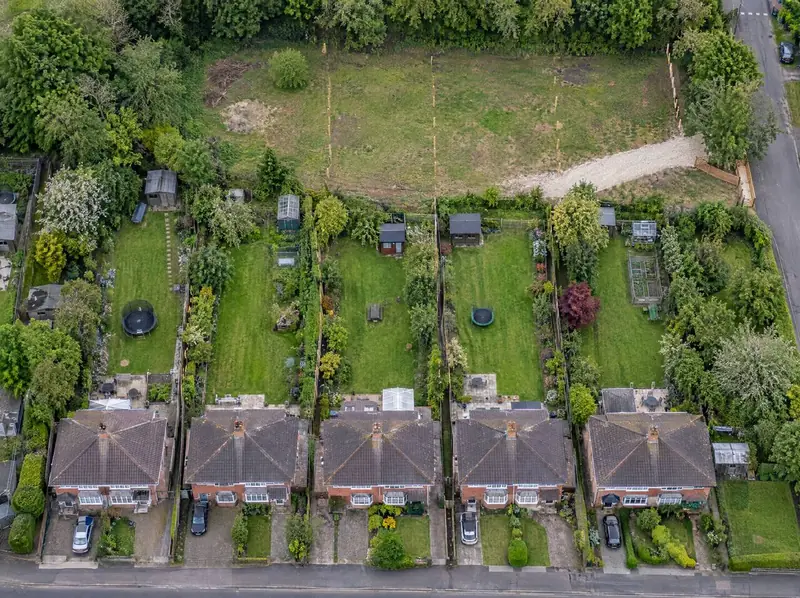
Before we suggest a combined scheme for homes in LA1, we read what the council’s Local Plan says about garden land, design and parking, and we look at past decisions on similar sites nearby. Those tell us how the council has treated backland schemes before.
If policy points against building behind the houses, combining gardens won’t change that, and we’ll say so. If it supports well-designed schemes with proper access, a combined site is often the best way to meet that standard.
How we’d take it forward in Lancaster
The steps for neighbours in Lancaster are: free appraisal, a meeting with the owners, heads of terms, signed agreements, one planning application, then completion and payment of each owner’s share. Setting up a group takes longer than a single plot, and timing depends on the owners, the lenders and the council, so we give ranges rather than promises.
Free appraisal of the combined land
We look at all the titles together, the possible access points, the surrounding homes and the planning policies that apply, then explain whether a combined scheme looks realistic and roughly what it might allow.
Meet the neighbours
We meet the owners together or separately, explain how the scheme and the routes work, and answer questions. We don’t approach your neighbours without your agreement, and nobody is committed at this stage.
Agree how value is shared
Heads of terms set out the route, each owner’s share, any extra for the garden providing the access, what happens if someone drops out, and the cap on each owner’s reasonable legal fees where it applies.
One planning application
We prepare and submit a single application for the whole site, with one shared access and a layout designed around all the existing homes. The council decides it, and nobody can promise the result.
Worth checking early
- Several owners have to agree, so a combined scheme usually takes longer to set up than a single plot.
- Every owner’s mortgage lender, title and covenants have to be dealt with, and one problem can hold up everyone.
- Tax depends on each owner’s circumstances, so each should take advice from a tax adviser.
Your questions, answered for Lancaster
Do we each need a solicitor for a combined scheme in Lancaster?
Yes. Each owner has different interests, a different title and possibly a mortgage, so each needs independent advice. On option and promotion agreements we cover each owner’s reasonable legal fees up to the cap agreed in the heads of terms.
Will Lancaster City Council prefer a combined scheme to single plots in Lancaster?
It often gives the council a better scheme to assess, with one proper access and more space between homes. But every application is judged on its merits against the council’s Local Plan, and the decision is the council’s. We test the layout against its policies before applying.
How many neighbours in Lancaster need to take part?
As few as two can be enough. What matters is that the gardens taking part make a workable site and that one of them provides access to the road. We tell you which gardens are essential and which would simply improve the scheme.
What if one neighbour in Lancaster changes their mind?
Before signing, they can simply step back, and we see whether the scheme still works without their garden. After signing, the agreements decide what happens, and they usually bind whoever owns the house next. Your solicitor will check those clauses carefully.
Other options in Lancaster
- Garage courts and yards
- Corner and side plots
- Sell part of your garden
- Large rear gardens
- Garden plot option agreement
- Planning permission for a garden plot