
- Planning authority
- West Suffolk Council
- Postcodes
- IP28
- Noon sun, 21 March
- About 38°
- Shadow from a 5 m eaves line
- About 6.5 m
- Planning plan
- Local Plan
- County
- Suffolk
The local picture in Mildenhall
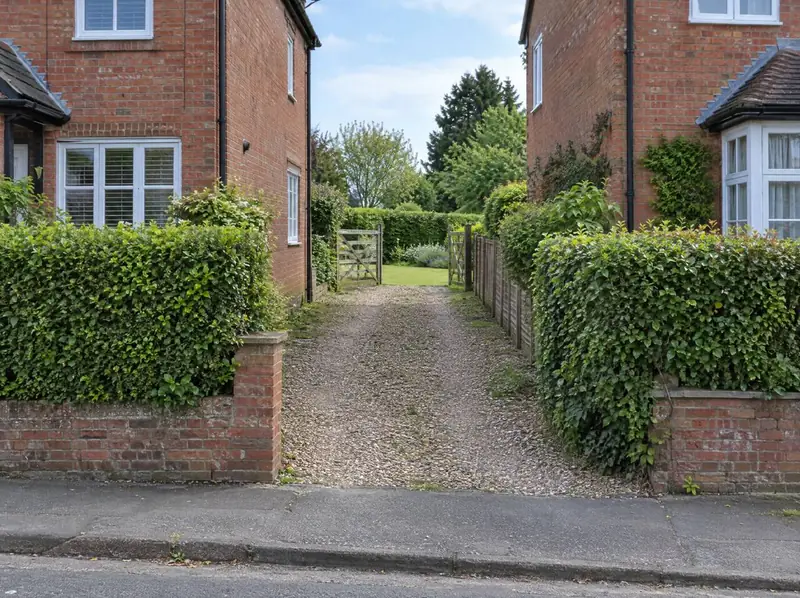
Back lanes behind homes in IP28 can be public roads, private tracks or a mix of both. If the lane is maintained at public expense, it will be on the list of streets the highway authority keeps, which anyone can check. If it’s private, you need a right to use it with vehicles for a new home.
We check that before planning anything, then look at how West Suffolk Council is likely to judge a home reached from the back rather than past the front.
The next steps, locally
The first step is a free, no-obligation appraisal. For a Mildenhall plot with a difficult way in, that means checking who owns each part of the route, what rights exist and how wide it is on the ground. If a neighbour or a ransom strip is involved, we agree an approach with you before contacting anyone.
Free plot appraisal
We start with the access, not the plot: title plans, rights of way, the width on the ground and the route to the road. It’s a desktop check and a conversation, with a site visit if it looks viable, at no cost.
Title and access check
With your solicitor we confirm who owns every strip between the plot and the road, what rights already exist and whether they cover a new home. Any ransom strip or missing right shows up at this stage.
Planning application
We design a layout that answers the access, privacy and neighbour questions councils ask about tandem and backland plots, then apply. The council consults neighbours and decides, and the decision is always the council’s.
Sale or build
Depending on the route you chose, the sale completes through a transfer of part, or you keep the land and we give a written quote for building the new home after design and survey.
Worth checking early
- Access is usually the deciding factor on these plots, so a large plot with a poor way in may not be a building plot at all.
- Long or narrow drives can mean extra cost for sprinklers, passing places, lighting or a bin collection point.
- Tandem layouts affect the front house’s privacy and quiet, and councils weigh that carefully.
Your questions, answered for Mildenhall
Can I get planning permission in Mildenhall before the access is sorted?
You can apply for planning on land you don’t own, as long as the owners are formally notified. But permission doesn’t give a right to cross anyone’s land. Most of the time it makes sense to agree access terms first, so the permission can actually be used.
Is a sprinkler system needed for a home at the end of a long drive in Mildenhall?
It may be. In England, where a fire engine can’t get within 45 metres of all points inside the home, other measures, often sprinklers, may be accepted if building control and the fire service agree. In Wales, every new house needs sprinklers anyway. Building control decides what’s needed for the specific layout.
How long does sorting access on a Mildenhall plot usually take?
It varies. Confirming an existing right of way can take a few weeks of solicitor time. Negotiating with a neighbour or a ransom strip owner often takes longer, and depends on how quickly everyone agrees and takes advice. Once we’ve seen the title and the route, we can give you a sensible estimate.
Could my neighbour and I in Mildenhall share one new access?
Often, yes. If both your gardens are long, combining them can give one shared drive and a better layout than either garden alone. Each owner keeps their house, and a written agreement sets out how the value is shared fairly.
Other options in Mildenhall
- Garden plot option agreement
- Garage courts and yards
- Plot feasibility and design
- Corner and side plots
- Planning permission for a garden plot
- Joint venture on your garden plot