
- Planning authority
- Medway Council
- Postcodes
- ME1, ME4, ME5
- Noon sun, 21 March
- About 39°
- Shadow from a 5 m eaves line
- About 6.3 m
- Planning plan
- Local Plan
- County
- Kent
How it plays out in Chatham
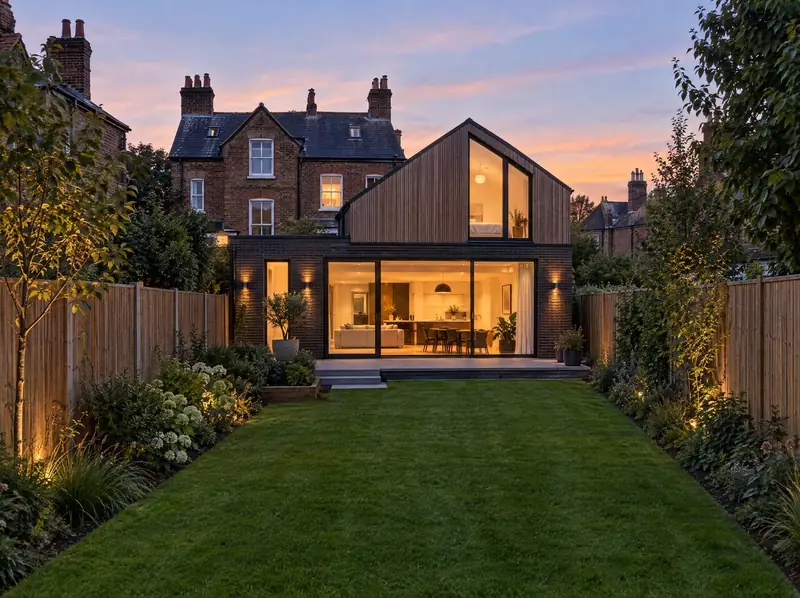
As the neighbour, you’ll live with the new home’s shadow. Picture the spring equinox in Chatham: at midday the sun climbs to about 39°, and a new home with 5 m eaves shades roughly 6.3 m of ground behind it. Near the winter solstice, with the sun at around 15°, that shade stretches much further.
In a joint venture you approve the layout before the application goes in, so we can show you where the shadow will fall on your garden at different times of year. Keeping the eaves low or setting the home further back can make a real difference.
The next steps, locally
Once you’ve chosen a structure, we draft heads of terms setting out who funds what, your share or the home you receive, deadlines and protections. Your own solicitor reviews them and the development agreement that follows. Only then do we commission surveys and design, agree the key layout points with you, and submit the application to Medway Council.
Free plot appraisal
We look at your title plan, access, neighbouring homes and the council’s planning policies, then talk through what might be built and whether a joint venture or a simpler sale suits you better.
Development agreement
Your own solicitor and ours turn the heads of terms into a binding agreement. Your solicitor advises on the security that fits, such as the land staying in your name until a set stage or a legal charge.
Planning and build
We fund and manage the planning application, Building Regulations approval and construction, reporting costs and progress to you at agreed points. The council decides the application, and building control checks the work.
Sale or handover
The new homes are sold and the proceeds are split as agreed through the solicitors, or your new home is handed over with its warranty, title and certificates in place.
Worth checking early
- Tax can differ from a simple sale of garden land, so take advice from a tax adviser before you sign.
- Your return isn’t fixed. It depends on build costs, sale prices and timing, unless you choose a structure with a fixed element.
- Development lenders usually want security over the land, which your solicitor needs to fit around your own protections.
Your questions, answered for Chatham
Can I do a joint venture on my garden in Chatham without paying anything?
In the usual structure, yes. You contribute the land, and we fund design, planning, construction and sale. You may still have your own costs, such as tax or your mortgage lender’s charges, so ask your solicitor and tax adviser to go through them before you sign.
Can I take a new home back instead of cash in Chatham?
Yes, if the plot can support it. Under a homes-for-land joint venture, one of the finished homes on your plot, or the only one, is transferred to you with its own title and paperwork. The agreement fixes the specification and the timetable.
Will a joint venture in Chatham affect my tax?
It may. Sharing in the development and sale of new homes can be taxed differently from a simple sale of garden land, and Stamp Duty Land Tax (SDLT) or VAT may arise depending on the structure. Take advice from a tax adviser on your own position before you commit.
How long does a garden joint venture in Chatham usually take?
Longer than a sale, because planning, building and selling all happen before you receive your share. The council’s decision time, the build programme and the market drive the timing. We give you a realistic range for each stage after the appraisal rather than a single promised date.
Other options in Chatham
- Build a home for family in your garden
- Bungalows on large plots
- Garage courts and yards
- Garden plot option agreement
- Large rear gardens
- Build a new home in your garden