
- Nation
- England
- National planning policy
- NPPF
- Planning authorities
- 9
- City
- Stoke-on-Trent
How councils in Staffordshire look at it
Planning costs on a garden plot in Staffordshire cover more than drawings. The application has to show how the scheme meets biodiversity net gain rules, and the layout must allow for fire engine access (or other measures, often sprinklers, agreed with building control and the fire service where a fire engine can’t get close enough). Drainage needs thought from the start, and in practice that means a drainage plan the council will want to see. Trees, wildlife, flood risk and bin collection can each add a report or a redesign. Under promotion we pay for all of it, and it is only recovered, within the agreed cap, from the proceeds of a sale with planning.
Planning authorities covering Staffordshire include Cannock Chase District Council, East Staffordshire Borough Council, Lichfield District Council, Newcastle-under-Lyme Borough Council, South Staffordshire Council, Stafford Borough Council, Staffordshire Moorlands District Council, Stoke-on-Trent City Council, Tamworth Borough Council.
How it works
Free plot appraisal
We check your title plan, access, the surrounding gardens and the policies in the council’s Local Plan as a desktop exercise, then talk it through with you. If it looks viable, we visit. No cost and no obligation.
Heads of terms
We set out the deal in writing: the term, how our fee works, the cap on planning costs we can recover, the minimum price, the marketing approach and the cap on your reasonable legal fees that we cover.
Agreement signed
Your solicitor and ours turn the heads of terms into a promotion agreement. It’s usually protected by an entry on your title, and if your house is mortgaged, your lender is asked to consent early.
We apply for planning
We commission the surveys and drawings, take pre-application advice where it helps, submit the application and deal with the council’s questions. You pay nothing at this stage, and the decision is the council’s.
Marketing and sale
With permission granted, the plot is marketed as the agreement sets out. You see the offers and approve the buyer, and the plot can’t be sold below the minimum price without your written consent.
Completion and payout
On completion, sale costs, our capped planning costs and our fee come out of the proceeds in the order the agreement sets. The balance is paid to you through your solicitor.
Planning promotion in towns across Staffordshire
- Stoke-on-Trent
- Newcastle-under-Lyme
- Burton upon Trent
- Cannock
- Tamworth
- Stafford
- Lichfield
- Kidsgrove
- Burntwood
- Rugeley
- Leek
- Great Wyrley
- Biddulph
Questions about planning promotion in Staffordshire
What does planning promotion cost a garden owner in Staffordshire?
Nothing upfront. We pay for surveys, drawings and planning fees, and recover them from the sale proceeds, within an agreed cap, only if a sale with planning happens. Our fee also comes from the proceeds, on a basis agreed in writing. Your reasonable legal fees for the agreement are covered up to a cap in the heads of terms.
How long does a planning promotion usually take in Staffordshire?
Longer than selling the land as it stands. Surveys and design often take a few months, the council then needs time to decide, and marketing and conveyancing follow. Council workload, requests for extra reports and any appeal drive the timing, so we give a realistic range after the appraisal rather than a promise.
Is planning promotion usual for small garden plots in Staffordshire?
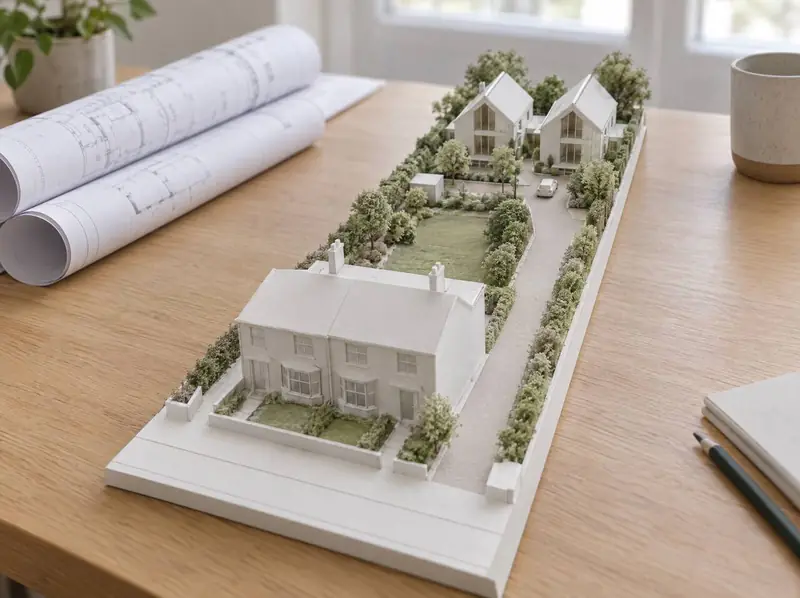
Not especially. Promotion is more common on larger sites, because fixed costs are spread over more homes. It can still work for a generous single garden or, more often, for neighbours combining gardens. For a smaller plot we may suggest a sale subject to planning or an option instead.
Can neighbours in Staffordshire combine their gardens?
Yes. Putting two or more adjoining back gardens together can allow one shared access and a better layout than separate plots. Each owner keeps their house. The owners usually sign a collaboration agreement, with an equalisation clause so that value is shared fairly even though only one garden provides the access. Each household should take its own legal advice.