
- Nation
- England
- National planning policy
- NPPF
- Planning authorities
- 13
- City
- Canterbury
Getting it right in Kent
National policy in England sets the frame for garden applications in Kent. The broad tests come from the National Planning Policy Framework (NPPF), under which design quality, the character of the area and the living conditions of neighbours all carry real weight when a home is proposed in a garden. The local planning authority then applies its Local Plan and the council’s design guide or supplementary planning document. Our job is to show, with drawings and evidence, how a scheme meets those tests on your plot.
Planning authorities covering Kent include Ashford Borough Council, Canterbury City Council, Dartford Borough Council, Dover District Council, Folkestone and Hythe District Council, Gravesham Borough Council, Maidstone Borough Council, Medway Council, Sevenoaks District Council, Swale Borough Council, Thanet District Council, Tonbridge and Malling Borough Council, Tunbridge Wells Borough Council.
How it works
Free plot appraisal
We review the title plan, access, constraints, policy and planning history around your address, then talk it through with you. If the plot looks viable we visit, and tell you plainly whether an application is worth making.
Surveys and design
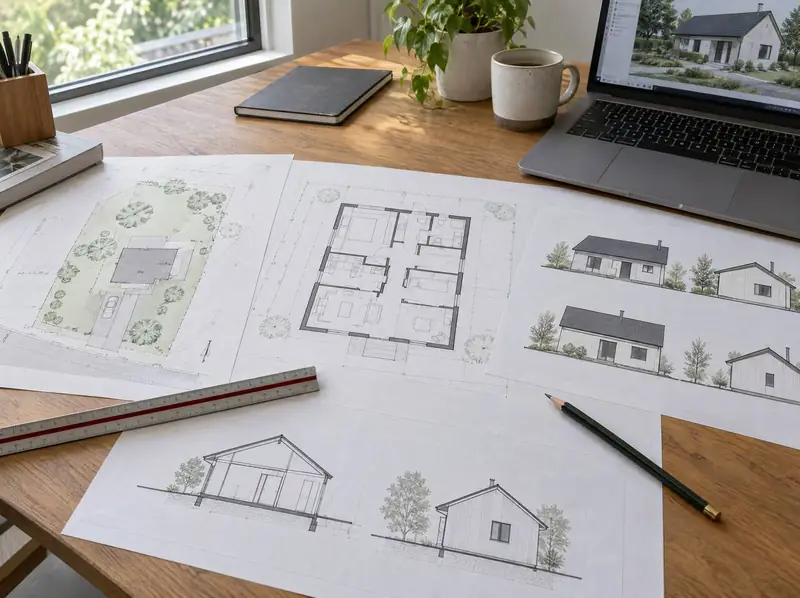
A measured survey comes first, followed by the specialist surveys the plot needs, such as trees or ecology. The layout is designed around access, privacy, daylight, parking, bins and garden space for both homes.
Pre-application advice
Where policy is tight or the plot unusual, we put a draft scheme to the council’s planners first. Their written response shows which issues to fix before you pay the full application fee.
Submit and manage
We complete the forms, ownership certificate, drawings and statements, pay the fee on your behalf and submit. During consultation we answer officers’ questions, respond to consultees and agree amendments where they help.
Decision and next steps
If permission is granted, we explain every condition and what must happen before work starts. If it’s refused, we review the reasons with you and set out the options: amend and resubmit, appeal, or stop.
Garden plot planning in towns across Kent
- Maidstone
- Gillingham
- Chatham
- Tunbridge Wells
- Folkestone
- Margate
- Ashford, Kent
- Canterbury
- Sittingbourne
- Gravesend
- Dartford
- Ramsgate
- Dover
- Tonbridge
- Strood
- Whitstable
- Deal
- Sevenoaks
- Rochester
- Herne Bay
- Broadstairs
- Faversham
- Swanley
- Longfield
- Swanscombe
Questions about garden plot planning in Kent
Who decides planning appeals for Kent garden plots?
In England, appeals go to the Planning Inspectorate; in Wales, to Planning and Environment Decisions Wales. Either way, an appeal against a refusal must be made within 6 months of the decision date. An appeal is decided on the planning merits by someone independent of the council, and it usually takes several months.
Do ecology rules affect garden plot planning in Kent?
They can. Gardens may support wildlife, and applications must take account of biodiversity net gain rules. Small sites may have simplified rules or exemptions, which change over time, so we check the current position for your plot. An ecology survey may be needed, and some surveys can only be done at certain times of year.
What drainage information do Kent garden plots need?
For a new home, foul drainage must connect to a sewer or a suitable treatment system, and rainwater has to be handled on site. In practice that means a drainage plan the council will want to see. If a public sewer crosses the plot, the water company may also need a build-over agreement, separate from planning.
Do I need my own solicitor to sell a plot in Kent?
Yes, always. Your solicitor checks the contract, deals with the transfer of part at HM Land Registry and asks your mortgage lender to release the plot if the house is mortgaged. On option and promotion agreements we cover your reasonable legal fees, with the cap agreed in heads of terms before work starts.