
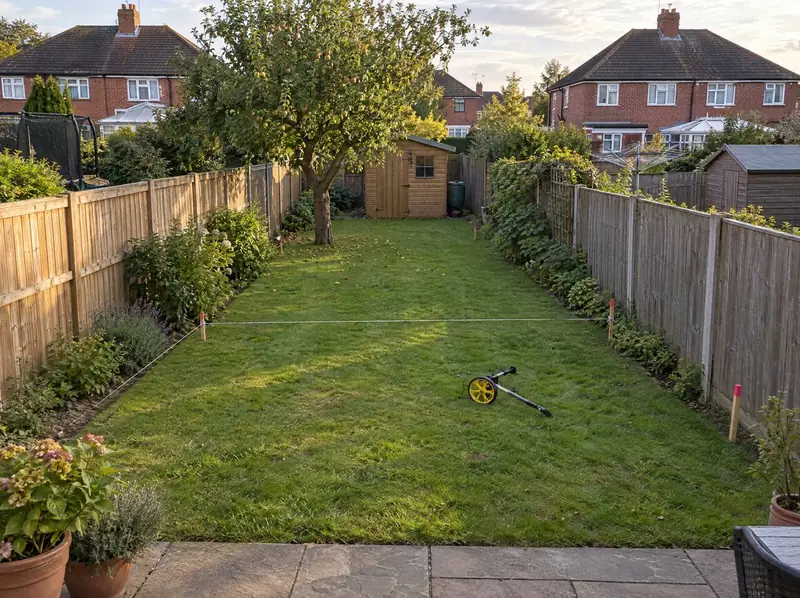
- Planning authority
- Pembrokeshire Coast National Park Authority
- Postcodes
- SA62
- Noon sun, 21 March
- About 38°
- Shadow from a 5 m eaves line
- About 6.4 m
- Planning plan
- LDP
- County
- Dyfed
What shapes a plot in St Davids
Garden plots don’t stop at the edge of St Davids. We look at land in nearby Haverfordwest, Milford Haven and Pembroke Dock in exactly the same way, and sometimes the strongest plot is one where two or three gardens back onto a single lane or share one access.
If yours is too narrow on its own, a neighbour’s garden might complete it, and selling together can produce a better scheme than either garden could alone. We can talk you both through how that works. Wherever the land sits, the planning authority for that address decides any application, whether that is Pembrokeshire Coast National Park Authority or the one next door.
From first call to decision
Here is what happens if you contact us about a garden in St Davids. We ask a few questions about the house, the garden and any mortgage. We run the desk checks and call back with a view, good or bad. If it’s good, we visit and make a written offer to buy the plot outright. If you accept, heads of terms set out the price, the boundary and who pays what before solicitors start.
Free plot appraisal
Tell us about your garden. We check the title plan, access, local policy and planning history from our desk, then talk it through with you. If it looks viable, we arrange a site visit, with no cost and no obligation.
Written offer and heads of terms
We put our offer in writing, subject to survey, title and contract. Heads of terms then record the plot boundary, the price, access rights, who pays which costs and the rough timetable for each stage.
Solicitors and lender
Your solicitor prepares the transfer of part and asks your mortgage lender to release the plot. Ours checks the title, covenants, rights of way and searches, while surveys of trees, ground and drainage run alongside.
After the sale
Any boundary fence or access works agreed in the transfer are carried out as set out. If the plot still needs planning, we apply as the new owner, and you can see and comment on the plans like any other neighbour.
Worth checking early
- A sale without planning is priced for the planning risk we take on, so it usually pays less than the same plot with permission.
- Lender consent, old covenants or access disputes can slow a sale, and occasionally stop it.
- Your house keeps a smaller garden, which some future buyers will welcome and others won’t.
St Davids: questions to ask
Can I sell the plot and keep living in my St Davids house?
Yes, that’s the whole point of a plot sale. You keep the house and the rest of the garden, and the boundary is drawn where you agree. The transfer can include rights and covenants that protect your home, such as who builds the new fence and limits on windows facing your property.
Do I pay Land Transaction Tax (LTT) when I sell a garden plot in St Davids?
No. Land Transaction Tax (LTT) falls on the buyer of land, so on a sale to us any amount due is ours to pay. What may affect you as the seller is Capital Gains Tax, depending on your circumstances and whether you still live in the house. Take advice from a tax adviser before you agree a deal.
Can I sell part of my garden in St Davids without planning permission?
Yes. We buy suitable plots with or without planning, subject to survey, title and contract. Without permission, we take on the risk that Pembrokeshire Coast National Park Authority refuses an application, and our offer allows for that. If you’d rather sell only once permission is granted, a sale subject to planning is the alternative.
Will I need my own solicitor for a garden plot sale in St Davids?
Yes. You need a solicitor or licensed conveyancer acting for you on the transfer of part, separate from ours. Choose one who handles property sales and, ideally, development land. Who pays their fees is agreed in heads of terms before you instruct them.
Other options in St Davids
- Garden plot option agreement
- Large rear gardens
- Combine gardens with your neighbours
- Corner and side plots
- Joint venture on your garden plot
- Planning permission for a garden plot