
- Nation
- England
- National planning policy
- NPPF
- Planning authorities
- 13
- City
- Canterbury
Before you start in Kent
Surface water is a design question on every garden build in Kent, not an afterthought. A new roof and drive send rain somewhere, so the scheme will need a drainage plan the council will want to see. Foul drainage raises a different issue: the new home must connect to a sewer, and where a public sewer crosses the plot, the water company may need a build-over agreement. We check sewer records and ground levels at appraisal, because a sewer that sits too high or in the wrong place can move the house.
Planning authorities covering Kent include Ashford Borough Council, Canterbury City Council, Dartford Borough Council, Dover District Council, Folkestone and Hythe District Council, Gravesham Borough Council, Maidstone Borough Council, Medway Council, Sevenoaks District Council, Swale Borough Council, Thanet District Council, Tonbridge and Malling Borough Council, Tunbridge Wells Borough Council.
How it works
Free plot appraisal
We check the title plan, access, constraints and planning policy from our desk, talk the plot through with you, and visit if it looks viable. There’s no cost and no obligation.
Survey and design
A measured survey records levels, boundaries, trees and neighbouring windows. We then design a layout and house that suit the plot, the street and your budget, and decide whether pre-application advice is worth seeking.
Planning and approvals
We submit the planning application and manage it to a decision, then deal with conditions, Building Regulations approval, the structural warranty, any build-over agreement and the new utility connections.
Written quote and build
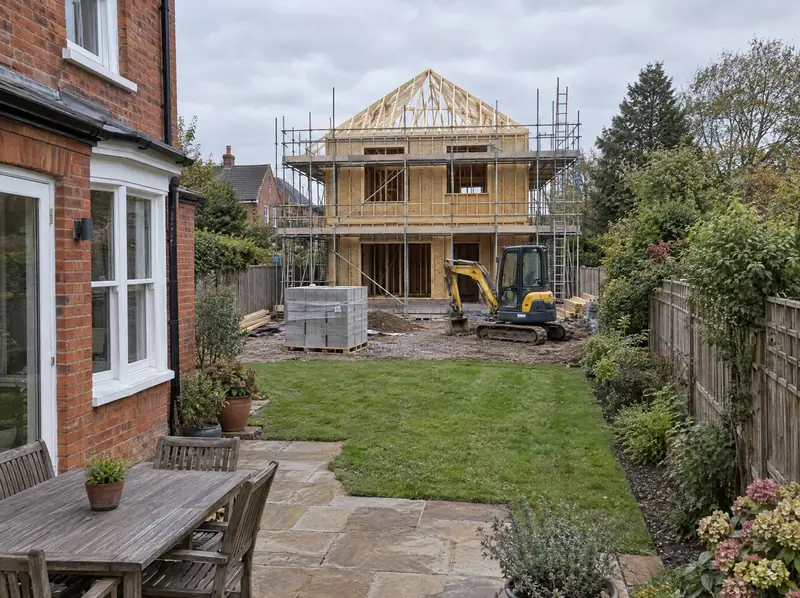
Once design and survey are complete you get a written quote. The build runs in stages — access and groundworks, foundations, frame and roof, fit-out and external works — with inspections at each key point.
Handover
You receive the completion certificate, warranty documents, Energy Performance Certificate, manuals and utility details, so the new home is ready to move into, let or put on the market.
Build in your garden in towns across Kent
- Maidstone
- Gillingham
- Chatham
- Tunbridge Wells
- Folkestone
- Margate
- Ashford, Kent
- Canterbury
- Sittingbourne
- Gravesend
- Dartford
- Ramsgate
- Dover
- Tonbridge
- Strood
- Whitstable
- Deal
- Sevenoaks
- Rochester
- Herne Bay
- Broadstairs
- Faversham
- Swanley
- Longfield
- Swanscombe
Questions about build in your garden in Kent
Do you build new homes in gardens across the Kent area?
Yes. We offer garden design and build across Kent, from the first appraisal to handover. We’re a new brand within the S&K Group, so rather than pointing to past jobs we set out a clear process: a free appraisal, a measured survey and design, a planning application, and a written build quote once the plot’s real costs are known.
How is rainwater dealt with in Kent garden plots?
Rain from the new roof and drive must be managed on site, and for a new home that usually means a drainage plan the council will want to see. Soakaways, permeable paving, rain gardens or a controlled outflow are the usual options, depending on ground conditions and flood risk. We look at levels and soil at survey stage so the drainage design fits the plot.
What does a garden design and build cost in the Kent area?
There’s no standard figure, because cost depends on access, foundations, services, specification and size rather than on the county. Guide price ranges are on our prices page and are guides only. You receive a written quote after design and survey, with fees, warranty, connections and any Community Infrastructure Levy listed separately.
Which council decides planning for a garden plot in Kent?
The council for your address decides. The planning authorities covering Kent include Ashford Borough Council, Canterbury City Council, Dartford Borough Council, Dover District Council, Folkestone and Hythe District Council and other councils. Each judges applications against its own Local Plan and the National Planning Policy Framework (NPPF), together with its design guidance. We prepare and submit the application and deal with the council’s questions, but the decision is always the council’s, never ours.